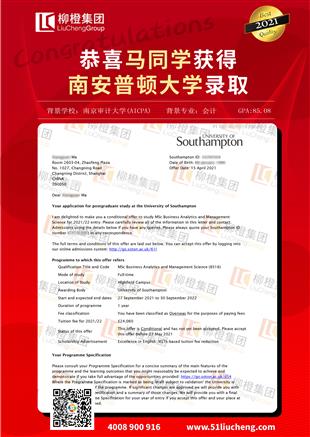

申請(qǐng)人員:張同學(xué)
申請(qǐng)?jiān)盒#?/span>埃克塞特大學(xué)
申請(qǐng)專業(yè):MSc Advanced Computer Science
簡(jiǎn)介:There has been constant concern about the state of physics in recent years, with sixth-form numbers dropping and university departments closing. But applications were up by an astonishing 18 per cent in 2011 and even the prospect of £9,000 fees could not prevent another big rise in 2012. The 8 per cent growth in the demand for places even gave physics more applications than chemistry for the first time. The “Brian Cox effect” has been credited with the recent boom in popularity, in recognition of the engaging Manchester University professor’s many television appearances. There were almost six applications to the place in 2011 and physics is now one of the most competitive tables, with high scores among the leading universities. No fewer than nine universities, led by top-placed Cambridge, average more than 500 points at entry. Like last year, Cambridge has a slim lead over St Andrews, while Oxford has regained third place. Aberdeen, in 20th place, was the only university to see over 90 per cent of its physicists find graduate-level employment or a postgraduate course within six months of completing a degree in 2010. But physics is among the top ten subjects nationally for employment prospects. Although unemployment is above average, at 11 per cent, almost half of all graduates continue their studies, either full or part-time. Physics has also produced consistently high scores in the National Student Survey, with almost every university satisfying at least three quarters of their undergraduates in the 2011 results. Sussex, in fifth place, has the most satisfied students, with Lancaster close behind. By contrast, physics was one of the lowest-scoring subjects in the 2008 Research Assessment Exercise. Under the new scoring system used in the table this year, Lancaster shares the top score with Cambridge, St Andrews and Nottingham. Swansea has overtaken Cardiff to become the leading university in Wales for physics. Hertfordshire is the highest-placed of the five post-1992 universities in the table. Most universities demand physics and maths at A level for both physics and astronomy, as well as good grades overall. Only one undergraduate in five is female and a similarly small proportion arrives without A levels or their equivalent. About 5 per cent transfer to other courses or drop out, usually at the end of the first year, but well over half of those who remain get firsts or 2:1s. The subjects are in the top 12 for starting salaries, averaging more than £23,650 in graduate-level jobs.以下是2013年Times物理和天文排名。
|
1

|
劍橋大學(xué)University of Cambridge |
查看詳情 測(cè)試我的申請(qǐng)成功率 |
|
2

|
圣安德魯斯大學(xué)University of St Andrews |
查看詳情 測(cè)試我的申請(qǐng)成功率 |
|
3

|
牛津大學(xué)University of Oxford |
查看詳情 測(cè)試我的申請(qǐng)成功率 |
|
4

|
杜倫大學(xué)Durham University |
查看詳情 測(cè)試我的申請(qǐng)成功率 |
|
5

|
薩塞克斯大學(xué)University of Sussex |
查看詳情 測(cè)試我的申請(qǐng)成功率 |
|
6

|
伯明翰大學(xué)University of Birmingham |
查看詳情 測(cè)試我的申請(qǐng)成功率 |
|
7

|
蘭卡斯特大學(xué)Lancaster University |
查看詳情 測(cè)試我的申請(qǐng)成功率 |
|
8

|
巴斯大學(xué)University of Bath |
查看詳情 測(cè)試我的申請(qǐng)成功率 |
|
9

|
格拉斯哥大學(xué)University of Glasgow |
查看詳情 測(cè)試我的申請(qǐng)成功率 |
|
10
|
曼徹斯特大學(xué)University of Manchester |
查看詳情 測(cè)試我的申請(qǐng)成功率 |
|
11

|
帝國(guó)理工學(xué)院Imperial College London |
查看詳情 測(cè)試我的申請(qǐng)成功率 |
|
11

|
諾丁漢大學(xué)The University of Nottingham |
查看詳情 測(cè)試我的申請(qǐng)成功率 |
|
13

|
謝菲爾德大學(xué)The University of Sheffield |
查看詳情 測(cè)試我的申請(qǐng)成功率 |
|
14

|
利茲大學(xué)University of Leeds |
查看詳情 測(cè)試我的申請(qǐng)成功率 |
|
15
|
愛(ài)丁堡大學(xué)University of Edinburgh |
查看詳情 測(cè)試我的申請(qǐng)成功率 |
|
16

|
布里斯托大學(xué)University of Bristol |
查看詳情 測(cè)試我的申請(qǐng)成功率 |
|
17

|
利物浦大學(xué)University of Liverpool |
查看詳情 測(cè)試我的申請(qǐng)成功率 |
|
18
|
華威大學(xué)University of Warwick |
查看詳情 測(cè)試我的申請(qǐng)成功率 |
|
19

|
倫敦大學(xué)學(xué)院University College London |
查看詳情 測(cè)試我的申請(qǐng)成功率 |
|
20

|
南安普頓大學(xué)University of Southampton |
查看詳情 測(cè)試我的申請(qǐng)成功率 |
|
20

|
阿伯丁大學(xué)University of Aberdeen |
查看詳情 測(cè)試我的申請(qǐng)成功率 |
|
22

|
薩里大學(xué)University of Surrey |
查看詳情 測(cè)試我的申請(qǐng)成功率 |
|
23

|
埃克塞特大學(xué)University Of Exeter |
查看詳情 測(cè)試我的申請(qǐng)成功率 |
|
24

|
拉夫堡大學(xué)Loughborough University |
查看詳情 測(cè)試我的申請(qǐng)成功率 |
|
25

|
紐約大學(xué)New York University |
查看詳情 測(cè)試我的申請(qǐng)成功率 |
|
26
|
赫瑞瓦特大學(xué)Heriot-Watt University |
查看詳情 測(cè)試我的申請(qǐng)成功率 |
|
27
|
倫敦皇家霍洛威大學(xué)Royal Holloway, University of London |
查看詳情 測(cè)試我的申請(qǐng)成功率 |
|
27

|
斯特拉斯克萊德大學(xué)University of Strathclyde |
查看詳情 測(cè)試我的申請(qǐng)成功率 |
|
29

|
萊斯特大學(xué)University of Leicester |
查看詳情 測(cè)試我的申請(qǐng)成功率 |
|
30

|
倫敦大學(xué)瑪麗皇后學(xué)院Queen Mary, University of London |
查看詳情 測(cè)試我的申請(qǐng)成功率 |
|
31

|
肯特大學(xué)University of Kent |
查看詳情 測(cè)試我的申請(qǐng)成功率 |
|
32

|
斯旺西大學(xué)Swansea University |
查看詳情 測(cè)試我的申請(qǐng)成功率 |
|
33

|
倫敦大學(xué)國(guó)王學(xué)院King s College London |
查看詳情 測(cè)試我的申請(qǐng)成功率 |
|
34

|
基爾大學(xué)Keele University |
查看詳情 測(cè)試我的申請(qǐng)成功率 |
|
35

|
索爾福德大學(xué)University of Salford Manchester |
查看詳情 測(cè)試我的申請(qǐng)成功率 |
|
36

|
卡迪夫大學(xué)Cardiff University |
查看詳情 測(cè)試我的申請(qǐng)成功率 |
|
36
|
赫爾大學(xué)University of Hull |
查看詳情 測(cè)試我的申請(qǐng)成功率 |
|
38

|
赫特福德大學(xué)University of Hertfordshire |
查看詳情 測(cè)試我的申請(qǐng)成功率 |
|
39

|
貝爾法斯特女王大學(xué)Queen s University Belfast |
查看詳情 測(cè)試我的申請(qǐng)成功率 |
|
40

|
諾丁漢特倫特大學(xué)Nottingham Trent University |
查看詳情 測(cè)試我的申請(qǐng)成功率 |
|
41

|
中央蘭開(kāi)夏大學(xué)University of Central Lancashire |
查看詳情 測(cè)試我的申請(qǐng)成功率 |
|
42

|
西蘇格蘭大學(xué)University of the West of Scotland |
查看詳情 測(cè)試我的申請(qǐng)成功率 |
|
43

|
阿伯里斯特維斯大學(xué)Aberystwyth University |
查看詳情 測(cè)試我的申請(qǐng)成功率 |
|
44
|
格拉摩根大學(xué)University of Glamorgan |
查看詳情 測(cè)試我的申請(qǐng)成功率 |



掃一掃
關(guān)注柳橙
關(guān)于柳橙| 聯(lián)系我們| 法律聲明| 加入我們| 網(wǎng)站地圖| 友情鏈接
Copyright ?2011-2026 柳橙網(wǎng) 版權(quán)所有
自費(fèi)出國(guó)留學(xué)中介服務(wù)機(jī)構(gòu)資格認(rèn)定
柳橙網(wǎng)為上海留成網(wǎng)信息技術(shù)股份有限公司(原上海駿文投資咨詢有限公司)所有

滬公網(wǎng)安備 31010502007205號(hào)
滬ICP備11045181號(hào)-4